Pewsheet for Week Beginning 23rd October 2016

Pewsheets

Click here for the pewsheet for the week beginning Sunday 23rd October 2016.  Please note different readings were chosen for St Barnabas’, and are not shown on this pewsheet.

Tip: If this, or any other, PDF document opens at too large a size, here’s what you do:

  1. Open Adobe Reader, for example, by opening a *.pdf document you have on your computer.
  2. From the Edit menu, click Preferences.
  3. With Page Display selected in the left hand list of Categories, on the right hand side of the window, choose a Page Layout and Zoom level that suits you, for example Single Page and Fit Page.
  4. Now any time you open a PDF, it will open at this zoom level.

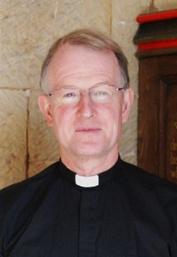
From Roger Brown…

Pewsheets

From time to time you may read or hear about someone who has ‘lost their faith’. They no longer go to church or have given up their Ministry because of problems with belief.

To ‘lose one’s faith’ is a strange phrase because faith is not a substance or commodity – a thing to be lost. Faith is about a relationship with the mystery we call God.

There are those people who are full of certainty, which in my view is a very worrying position to hold. The opposite of certainly is not doubt but faith.
Our Christian journey is about learning to live with questions. We cannot, by definition, know all the answers but we keep on our journey, as we say, ‘in good faith’. I suspect that many people hide their view on belief, thinking that others have no problems.

Believing is difficult, so join the club and let us journey together. For me, one of the most important words in the Bible is ‘Hope’. I find great encouragement in the words of the Epistle to the Hebrews (Chapter 11). Faith is the assurance of things hoped for, the conviction of things not seen!
Hope, as they say, springs eternal and St Paul tells us ‘There are three things that last for ever.  Faith, Hope and Love.’

Pewsheet for Week Beginning 2nd October 2016

Pewsheets

Click here for the pewsheet for the week beginning Sunday 2nd October 2016.

Tip: If this, or any other, PDF document opens at too large a size, here’s what you do:

  1. Open Adobe Reader, for example, by opening a *.pdf document you have on your computer.
  2. From the Edit menu, click Preferences.
  3. With Page Display selected in the left hand list of Categories, on the right hand side of the window, choose a Page Layout and Zoom level that suits you, for example Single Page and Fit Page.
  4. Now any time you open a PDF, it will open at this zoom level.

The Rural Dean Writes…

Clergy

This week we have celebrated Harvest Festival.  Sometimes it can be hard for those of us who live in towns to fully connect with the importance of good weather and a good harvest to carry us through the winter.  However, as a gardener I have learnt over the years just how hard it is to get a good crop year by year.  This year the cold weather at the beginning of the growing season and rain at the wrong times has resulted in a terrible runner bean harvest, as well as potatoes full of little holes.  The skill and sheer hard work by our farmers and those across the world is something to really celebrate and give thanks for at Harvest.

But the Church also reminds us that all good gifts around us are sent from heaven above.  So thank the Lord O thank the Lord for all his love.  We worship a creator God who made our world so beautiful and fruitful and Harvest is a special time for giving thanks to God for the enormous beauty and variety of nature.  But of course it is also a time for thinking of those who are less fortunate than us and so we traditionally bring gifts to give to others.  In the Old Testament, we hear how the people of God always gave God the first and the best of the harvest. Giving God the first and best is how we are called to live as well.

Julia Peaty

From Gordon…

Clergy

The Conundrum of Rich and Poor

In today’s Gospel, St Luke describes the lifestyle of a rich man who dresses in purple and fine linen and is able to feast sumptuously every day. His table, however, does not seem to offer fellowship and companionship but rather isolation and exclusion. Lazarus, the beggar, ill and starving, subsists on almost nothing and has dogs, rather than humans, as companions. Loneliness remains a major issue for many in our society who are poor and marginalised.

Things are the opposite in heaven for Lazarus. He joins the company of Abraham and the angels. He had almost nothing on earth and is now richly blessed in heaven. For the rich man, however, existence has become a torment. He remains alone – the hell of loneliness – and no longer has his fine possessions and sumptuous lifestyle. Yet, he still carries with him his earthly assumptions. He attempts unsuccessfully to speak to Lazarus, his perceived inferior, through an intermediary, Abraham. He wishes to warn his brothers on earth about the prospects of hell but doesn’t make any connection between their privileged, uncaring lifestyle and its inappropriateness for the life of heaven, a point made very powerfully in today’s reading from Timothy.

In essence, the Gospel reading is less about inequality and more about connection. Those who are rich have within their power the capacity to offer benefits to the poor. The Church has within its power the capacity to reach out to all and commend to them the reality of God’s concern for all and the unqualified gifts of love and grace that God offers to all. This offer transcends all our earthly difficulties and inequalities. It is a breath-taking reality.


Pewsheet for Week Beginning 18th September 2016

Pewsheets

Click here for the pewsheet for the week beginning Sunday 18th September 2016.

Tip: If this, or any other, PDF document opens at too large a size, here’s what you do:

  1. Open Adobe Reader, for example, by opening a *.pdf document you have on your computer.
  2. From the Edit menu, click Preferences.
  3. With Page Display selected in the left hand list of Categories, on the right hand side of the window, choose a Page Layout and Zoom level that suits you, for example Single Page and Fit Page.
  4. Now any time you open a PDF, it will open at this zoom level.

From Revd. Gordon Parry

Clergy

Wealth and God’s Economy

Our Gospel reading deals with the management of wealth – a subject that preoccupies almost all societies both historically and today. Wealth can be very divisive and it clearly threatened the relationships between the corrupt steward, his master and his debtors.

Today we worry about wealth, having sufficient to lead a reasonable life, the widening gap between rich and poor in our society and many others, the management of our national wealth and the stewardship – good and bad – of corporate wealth by companies and banks.  Within the retailing sector we have recently seen the devastating effects on tens of thousands of people through the closure of BHS, in part at least through individual greed.  In contrast the John Lewis Partnership offers a model of shared wealth where all employees are partners and benefit from the profits made by the business and their efforts within it. It is interesting that two current Sunday evening TV series, ‘Victoria’ and ‘Poldark’ both have as their subtexts the relationship between rich and poor, opulence and destitution and the power and privilege that wealth and social position confer.

Then there’s spiritual wealth.  We are familiar with Matthew 6:21 (or Luke 12:34). ‘For where your treasure is, there your heart will be also.’ The Church encourages the accumulation of spiritual wealth or ‘spiritual capital’ as it is often called.  Such wealth or capital is renewed and augmented by our life as a Christian community. Through prayer, worship and a constant awareness of the power of the Holy Spirit in our lives, it truly becomes wealth to be shared for the greater good of all.

Gordon